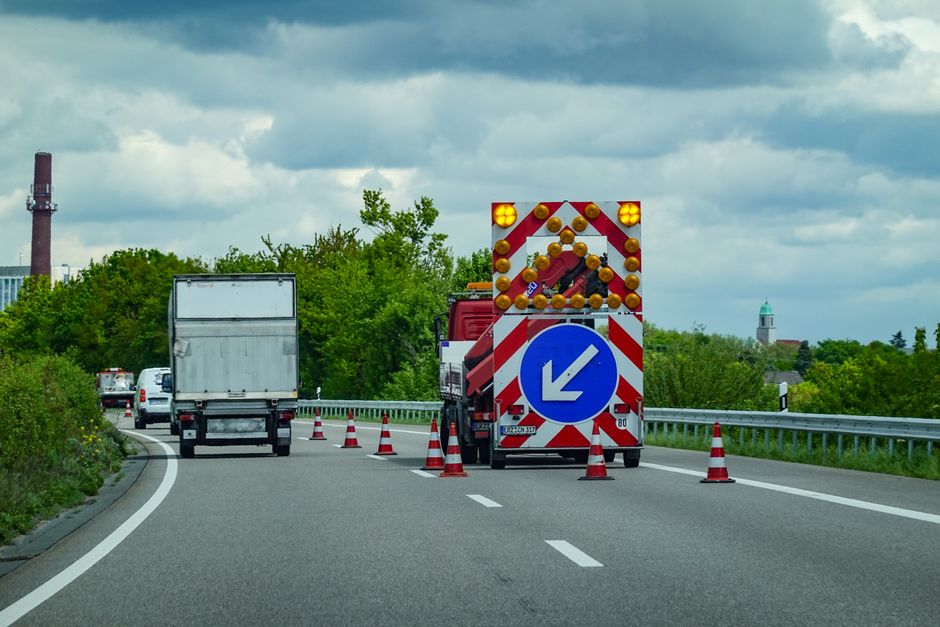
Road closure permits for Barnet removals explained

If you are planning a move in Barnet and the lorry, van, or parking setup means part of the road may need to be restricted, the paperwork can feel oddly daunting. Road closure permits for Barnet removals explained simply: they are the permissions and practical arrangements needed when a move affects public roads, bays, access, or traffic flow. That might sound dramatic, but in reality it often comes down to good planning, early communication, and knowing who needs to approve what.
For many household and business moves, you will never need a full road closure at all. More often, you need a parking suspension, traffic management plan, or temporary access arrangement. Still, the phrase gets used broadly, and that is where confusion starts. This guide clears it up properly, with straightforward advice you can actually use on moving day.
We will cover when permits matter, how the process usually works, what can go wrong, who should care, and how to keep your move calm rather than chaotic. Truth be told, a little admin before the van arrives can save a lot of stress once the boxes are stacked by the door.
- Why it matters
- How it works
- Key benefits and practical advantages
- Who needs this and when it makes sense
- Step-by-step guidance
- Expert tips for better results
- Common mistakes to avoid
- Tools, resources and recommendations
- Law, compliance and best practice
- Options, methods and comparison
- Case study or real-world example
- Practical checklist
- Conclusion
- Frequently asked questions
Why Road closure permits for Barnet removals explained Matters
A move is never just about loading furniture. In Barnet, as in much of London, the street outside your property can be the difference between a smooth move and a day full of delays. If a removal vehicle cannot stop safely, if parking is tight, or if a larger vehicle needs extra space to load, you may need some form of permission or traffic control.
That matters for a few very practical reasons. First, your removals team needs legal, safe access. Second, neighbours and passing traffic need to remain protected. Third, if a vehicle is left in the wrong place and receives a penalty, the whole move can become more expensive than expected. Nobody wants to hear that on a Monday morning while the kettle is still in a box.
There is also a planning angle. When access is restricted, removal crews may need extra time, a smaller vehicle, a parking bay suspension, or a carefully timed arrival window. A move that looks simple on paper can get tricky fast if the road is narrow or busy. And in Barnet, where you may deal with residential streets, controlled parking zones, or busy mixed-use roads, that extra planning often pays off.
One more thing people sometimes miss: a permit issue is not only about compliance. It is also about goodwill. If your move is handled neatly, you are less likely to irritate neighbours, block deliveries, or create a logjam at the worst possible moment. That sounds small until you are the person waiting for a taxi, a school run, or a food delivery that cannot get through.
How Road closure permits for Barnet removals explained Works
Let's separate the terms. A full road closure is exactly what it sounds like: the road is closed to through traffic for a period of time. That is rarely needed for a standard home move. More commonly, what people need is a parking suspension, temporary traffic management, or a short-term access arrangement so a removal vehicle can load and unload without obstruction.
The process usually starts with the move itself. If the property is on a narrow road, has limited parking, sits near schools or busy junctions, or needs a large truck, the removals plan should flag that early. From there, the person organising the move may need to contact the relevant local authority or manage the restriction through a contractor who understands the local process. In practical terms, the earlier this is sorted, the fewer surprises you get.
Here is the simple version: assess the access, decide whether a permit or suspension is needed, apply with enough lead time, and confirm the conditions for the day. Sometimes the requirement is only for one bay. Sometimes it affects several spaces. Sometimes a bigger vehicle is not the problem at all, and the real issue is simply that the street is too busy for long loading stops. It is a bit of a puzzle, but a solvable one.
If you are arranging support through a local removals team, it helps to talk through the access route, vehicle size, and timing. Services such as man and van support, man with van hire, or a larger moving truck can suit different road conditions. For heavier or bulkier moves, you may also want to look at removal truck hire so the vehicle choice matches the street, not just the items.
Key Benefits and Practical Advantages
Permits and traffic arrangements can feel like admin overhead, but they bring real benefits. The biggest one is control. Instead of guessing whether a van will fit or hoping the road stays clear, you create space for the move to happen properly. That alone can save time and keep the day steady.
Another benefit is safety. Removal teams handle awkward items all the time, from wardrobes to desks to boxed glassware that rattles a little too much. If they can load without dodging traffic or squeezing between parked cars, the risk of damage and awkward lifting goes down. Simple, really.
There is also a financial angle. Delays can create knock-on costs: extra labour time, rescheduling, parking penalties, missed delivery windows, or even an extra vehicle trip. Good access planning does not guarantee perfection, but it reduces the sort of problems that tend to snowball.
For businesses, the benefits can be even more obvious. An office move on a busy street needs coordination because staff access, client movement, and nearby traffic all matter. If that sounds familiar, it may be worth comparing specialist office relocation services with broader commercial moves. The same is true for homes: a planned move using home moves or house removalists can be far easier to coordinate than a last-minute scramble.
| Approach | Best for | Typical advantage | Possible drawback |
|---|---|---|---|
| Informal loading only | Very quiet streets with easy access | Fast and simple | Risky if parking is tight or restricted |
| Parking suspension / bay reservation | Most residential removals | Creates space for the van or truck | Needs lead time and accurate planning |
| Traffic management or partial closure | Busy streets, oversized vehicles, difficult access | Safer and more controlled | More coordination and possible cost |
| Full road closure | Rare, specialist situations | Maximum access control | Usually complex and not necessary for standard moves |
Who This Is For and When It Makes Sense
This is not only for people moving on a narrow street. It can be relevant if your property sits on a terrace road, beside a school, near a parade of shops, or anywhere that parking disappears by breakfast. It can also matter if you are moving from a flat with limited external space, especially where stairs, distance, and loading time stretch the schedule.
Home movers often need this help when a large vehicle will be parked close to the property or when the road is already congested. If you are moving from a larger house, using experienced house removalists can be useful because they are used to judging access before anything is lifted. You can feel the difference when the team arrives and already knows where the bottlenecks are.
Commercial clients should pay even closer attention. Offices, clinics, workshops, and shops can all suffer if access is blocked at the wrong time. A delivery coming in behind you, a customer trying to find a space, a staff member trying to leave, it all starts to stack up. In those situations, it makes sense to plan access as carefully as the packing itself.
It may also be relevant if you are only moving a few bulky items. For example, furniture pick-up jobs can still need parking space or access planning because sofas, cabinets, and bed frames are awkward to carry through a busy street. If that sounds like your situation, a furniture pick-up service can be a more practical fit than trying to do it all yourself.
Step-by-Step Guidance
Here is the cleanest way to think about the process. Keep it simple and start early. That really is half the battle.
- Check the access at both ends of the move. Look at the street width, parking restrictions, nearby junctions, and whether the vehicle can stop without blocking traffic.
- Decide what kind of access support you actually need. A full road closure is rare. More often you need a bay suspension, loading space, or a timed stop for a van or truck.
- Speak with your removals provider early. Tell them about stair access, lifts, loading distance, narrow roads, and any awkward bends. The good ones will spot issues straight away.
- Choose the right vehicle. A small van may be perfect for one street, while a larger truck is better for another. Size matters here, no getting around that.
- Leave enough lead time. Permit-related arrangements often need advance notice. Exact timelines vary, so do not leave it until the week of the move if you can avoid it.
- Confirm the move-day rules. Make sure everyone knows where the vehicle will park, who will supervise access, and what to do if a bay is occupied.
- Keep a backup plan. If the road is blocked unexpectedly, a nearby alternative loading point may save the day.
A practical example helps. Imagine a family moving out of a terraced house on a busy Barnet street. The road has parked cars on both sides, and the removal team needs space for a truck and a safe loading path. The solution might be a controlled parking arrangement rather than a full closure. That means the road stays usable, but the space outside the property is reserved long enough for the move to happen smoothly.
If the move involves packing too, combining access planning with packing and unpacking services can save time and reduce the pressure on the day. Boxes sealed properly, labelled clearly, and ready near the door make access arrangements far more effective.
Expert Tips for Better Results
After seeing a lot of move-day setups, a few patterns become obvious. The first is that access is usually underestimated. People focus on boxes and forget the road outside, and then suddenly the van is circling the block while everyone checks their phones. Not ideal.
One useful habit is to walk the route from the property to the vehicle with fresh eyes. Is there a kerb step? A low branch? A tight gate? A delivery van likely to stop right where you need space? These little things can slow a move more than people expect.
Another tip: be realistic about vehicle size. Bigger is not always better. A smaller vehicle that can stop safely and make more trips is sometimes smarter than a large truck that creates access headaches. That is especially true on residential streets where parking is scarce.
And do not forget timing. Early morning moves can help avoid traffic, but they can also mean neighbours are still getting ready, bins are out, and there is less room for error. Mid-morning can be calmer in some places. It depends. A good removals team will usually know what works best for the type of street you are on.
If you are unsure where to start, use a local provider who is used to Barnet roads and the practical side of street access. You can learn more about the company background on the about us page and make direct arrangements through the contact us page when you are ready. Sometimes a short conversation solves what ten emails would not.
Common Mistakes to Avoid
The most common mistake is leaving access planning too late. People finalise the removals date, book the crew, pack a few boxes, and then remember the road might not allow simple loading. That is where stress creeps in.
A second mistake is assuming a road closure permit is always required. Often it is not. The real issue may be parking or loading space. If you overcomplicate it, you can spend time chasing the wrong solution. On the other hand, if you underplay the issue, you risk a messy move. It is a balance.
Another one: not sharing enough detail with the removals team. If the front door is 40 metres from the nearest stopping point, say so. If there is a steep incline, say so. If the building has awkward access after 6 p.m., say that too. Minor details, major difference.
Finally, do not assume every vehicle will work just because it has the right capacity. A vehicle can be large enough for the job and still be a poor fit for the street. That is a classic moving-day headache, and very preventable.
- Do not leave permit checks until the last minute.
- Do not guess the vehicle size you need.
- Do not forget loading distance from kerb to door.
- Do not assume neighbours or deliveries will magically move aside.
- Do not treat access planning as a small detail. It is part of the move.
Tools, Resources and Recommendations
You do not need a complicated toolkit, but a few simple things help. A phone camera is useful for photographing the street outside the property, especially if you want to show the removals team where the vehicle could stop. A tape measure can help if you are unsure about door widths, hallway bends, or vehicle access. Old-fashioned, yes. Still useful.
For larger or heavier jobs, consider whether the right vehicle is already part of the plan. The service pages for man and van, man with van, and moving truck are helpful starting points when you want to match the move to the access conditions. If you need an additional vehicle option, removal truck hire can suit more demanding logistics.
For people moving a full household, the broader home moves service can bring more structure to the process. For office or business moves, the relevant route may be commercial moves. The value is not just transport. It is the coordination around the transport, which is where access issues usually live.
One small recommendation: keep all moving details in one note or message thread. Vehicle size, addresses, time window, access notes, permit status, contact numbers, and any special instructions. That sounds boring. It is. But boring paperwork often saves a day from going sideways.
Law, Compliance, Standards, or Best Practice
Because this topic touches public roads, the safest approach is to treat it as a compliance issue as well as a logistics issue. Exact rules and application processes can vary depending on the road, the nature of the restriction, and the authority responsible for the street. So while the general idea is consistent, the practical steps can differ.
Best practice is to check early, keep written confirmation where available, and make sure the move follows the conditions attached to the permit or suspension. That may include times, vehicle limits, signage requirements, or where loading is allowed. If you are using a removal company, ask how they typically handle street access and whether they are used to coordinating with local restrictions.
It is also wise to think about duty of care. Vehicles should not be left in a way that creates unnecessary risk for pedestrians, cyclists, neighbours, or other road users. Removal teams should work safely, and homeowners or business managers should be honest about anything that could make the setup difficult. No one wins by pretending a narrow road is wide just because it would be convenient.
If there is any doubt, seek clarification before the move rather than hoping it will sort itself out on the day. It usually does not. To be fair, the street tends to have its own opinion.
Options, Methods, or Comparison Table
If you are deciding how to approach access for a Barnet move, the main question is usually not "permit or no permit?" It is "what level of control do I actually need?" Here is a practical comparison.
| Method | What it does | When it suits | Why people choose it |
|---|---|---|---|
| Standard roadside loading | Uses normal parking or short-stop access | Quiet roads with room to stop | Quick, simple, minimal admin |
| Parking suspension | Reserves a space for the move vehicle | Typical residential moves | Good balance of control and practicality |
| Traffic management | Controls vehicles or movement near the property | Busy or awkward access points | Improves safety on tighter streets |
| Partial or full road closure | Restricts access for a period of time | Rare, more complex moves | Used when less restrictive options are not enough |
In real life, many moves sit in the middle. They are not simple enough for a basic stop-and-go approach, but they do not require a full closure either. That middle ground is where planning matters most. If you get that part right, the rest tends to feel much easier.
Case Study or Real-World Example
Here is a realistic example from the kind of move people often underestimate. A couple moves out of a two-bedroom flat in Barnet on a residential road with parked cars on both sides. The lift is small, the stairwell is tight, and the nearest available parking is farther away than they thought. By the time boxes are downstairs, the movers are already carrying items farther than ideal.
Instead of trying to wing it, they arrange a better loading setup in advance. The removal vehicle is chosen to suit the street, the access window is agreed, and the space outside the building is reserved long enough for the team to work without squeezing past passing traffic. The move still takes effort, of course. Moves do. But the day runs more calmly, fewer items are handled twice, and the team is not wasting energy walking back and forth in the rain. Small win, but a real one.
That is the point of sorting road access early. It does not make moving glamorous, let's face it, but it does make it manageable. And a manageable move is usually a successful one.
Practical Checklist
Use this list before moving day. It is short on purpose.
- Confirm the property access at both the old and new address.
- Check whether the road needs a suspension, access arrangement, or other control.
- Choose the right vehicle size for the street.
- Tell the removals team about stairs, narrow entrances, or long carry distances.
- Book packing help if boxes will not be ready in time.
- Keep contact numbers for everyone involved in the move.
- Make sure neighbours are not surprised by the vehicle or timing where courtesy notice is sensible.
- Prepare a backup stop point nearby if the first space is occupied.
- Label items clearly so unloading is faster and cleaner.
- Double-check the final move-day schedule the day before.
Expert summary: For most Barnet moves, the smartest approach is not chasing a dramatic full road closure. It is matching the access plan to the street, the vehicle, and the amount of time you really need. Keep it practical, and the process becomes much less stressful.
Conclusion
Road closure permits for Barnet removals explained properly really come down to access planning. In many cases, you will not need a full closure at all, just the right permission or arrangement so the move can happen safely and legally. Once you understand the difference, the whole subject becomes less mysterious and far more manageable.
The best moves are usually the ones where the outside logistics are sorted before the first box leaves the hallway. That means choosing the right vehicle, planning around the road, being honest about access, and allowing enough time for permissions if they are needed. Do that, and you give yourself a much calmer day.
If you are planning a move and want a smoother experience from the start, speak to a team that understands Barnet access, vehicle choice, and practical removals planning. It can make all the difference, honestly.
Get a free quote today and see how much you can save.
And if you only take one thing from this guide, let it be this: a bit of planning outside the front door can save a lot of hassle inside it.
Frequently Asked Questions
Do I always need a road closure permit for a Barnet removal?
No. Many removals only need parking space or a temporary loading arrangement. A full road closure is usually reserved for more complex situations, and most household moves never need one.
What is the difference between a road closure and a parking suspension?
A road closure restricts use of the road itself, while a parking suspension usually reserves a specific space for loading or unloading. For most moves, the suspension is the more common and practical option.
How far in advance should I check access requirements?
As early as possible. The sooner you check, the more time you have to confirm whether a permit, suspension, or different vehicle is needed. Last-minute sorting is where trouble tends to start.
Can a smaller van avoid the need for a permit?
Sometimes a smaller van is easier to place, but it does not automatically remove the need for access planning. If the road is restricted, busy, or fully parked, you may still need permission or a reserved space.
What if my street is very narrow?
Then access planning becomes even more important. A narrower street may require a smaller vehicle, a better time slot, or a more controlled loading arrangement so the move stays safe and practical.
Are road closures common for home moves in Barnet?
Not usually. Most home moves are handled with parking control, loading space, or careful vehicle timing rather than a full closure. Full closures are more specialist and less common.
Do business moves need different planning?
Often, yes. Commercial moves can involve staff access, customer flow, deliveries, and tighter deadlines. That means the road access plan may need more coordination than a standard home move.
What happens if the parking space I planned for is taken?
It helps to have a backup plan, such as another nearby loading point or a team member who can help monitor access. A good removals crew will usually expect that possibility and plan around it.
Can removals companies help with access planning?
Yes, many can. Experienced movers usually know how to assess the street, recommend the right vehicle, and identify when more controlled access is likely to be needed.
Is it worth paying extra for a bigger truck?
Not always. A bigger truck can reduce trips, but it may be awkward on a tight street. The best choice depends on the property access, the load, and how easy it is to stop safely outside the building.
What should I tell my removals team before move day?
Tell them about road width, parking restrictions, stair access, lift size, walking distance from vehicle to door, and any local issues such as school traffic or busy delivery times. Those details really matter.
Where can I get help if I am unsure what type of move I need?
If you are still deciding, compare the service that fits your situation best, whether that is man and van support, home moves, or commercial moves. A short conversation can usually point you in the right direction.